The director of the films “Out of the Car” and “Annihilation” criticizes film studios and the theory of auteur cinema, but has high hopes for television
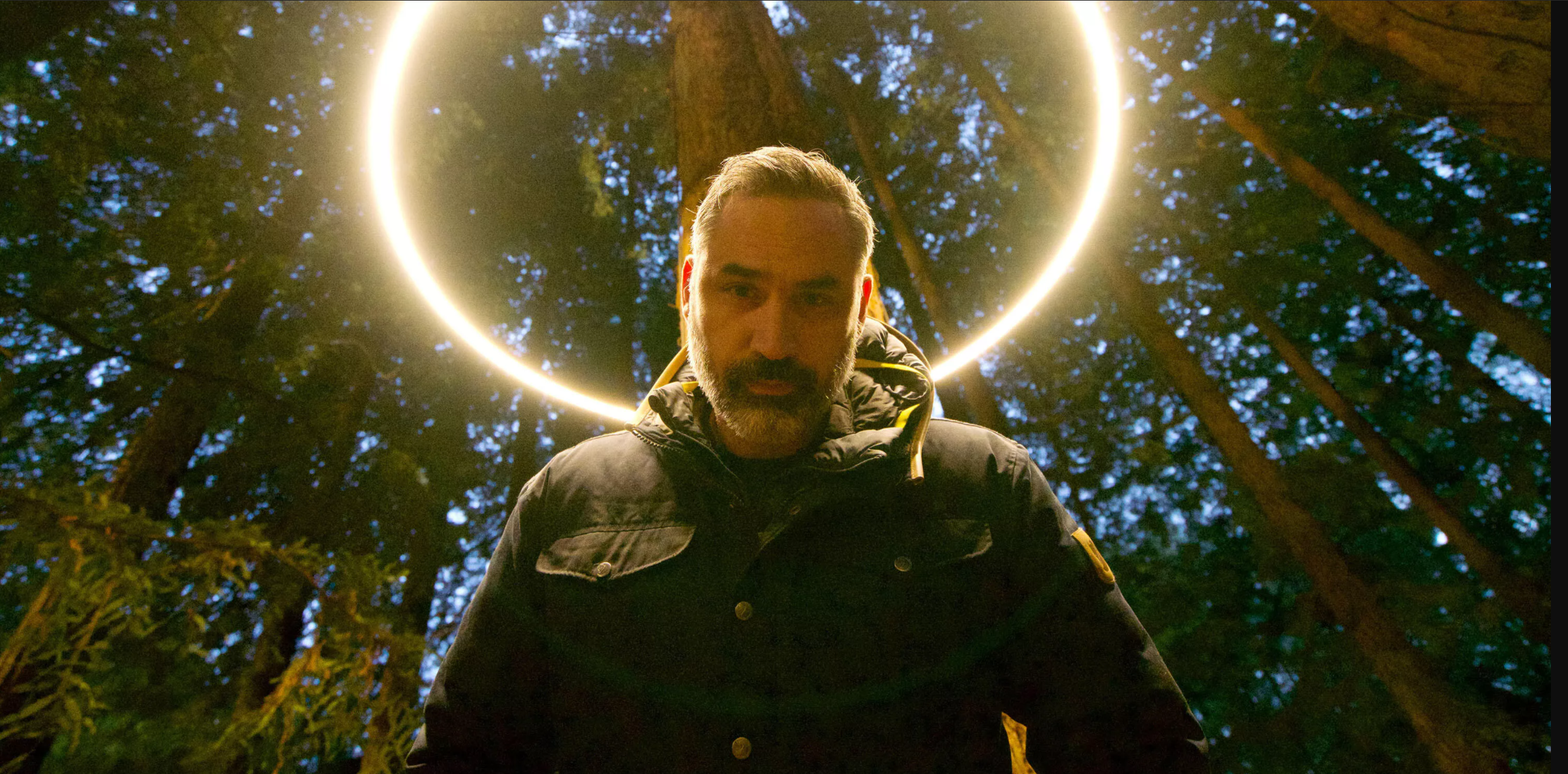
Alex Garland, the 47-year-old son of a British political cartoonist, became famous for his novels The Beach and The Tesseract, and then began a long and painful relationship with Hollywood. In the adaptation of The Beach, Leonardo DiCaprio played, and Garland turned to screenwriting, writing scripts for two Danny Boyle films: 28 Days Later and Inferno. He also worked on the 2012 reboot of Judge Dredd, which flopped at the box office.
In directing, Garland made his debut in Out of the Machine, starring Oscar Isaac as the genius robot creator, Alicia Vikander as his most advanced brainchild, and Donal Gleason as the gullible young man who fell in love with her. The project was taken under the wing of Focus Features, but for unexplained reasons, the film was refused rental, after which it was intercepted by A24. Focus Features president lost office when the film earned $ 25 million at home and earned two Oscar nominations (Garland was nominated for Best Original Screenplay, and the VFX team won their award).
Garland’s next project, the 55 millionth Annihilation, was funded by Skydance Media and Paramount, but production fell on a period of leadership changes. Paramount released the movie on slightly more than 2,000 home screens, and Netflix sold most of the international screening rights. So far, Annihilation has raised only 38 million in North America.
Garland, who is currently working on the pilot for FX’s Devs, took part in a public interview at the SF FILM Summit, where he spoke with University of Southern California professor Tara McPherson.
Adaptation
According to Garland, “Annihilation” is a free adaptation of Jeff Vandermeer’s “The Southern Reach” trilogy. The writer and director also adapted the novel Don’t Let Me Go by Kazuo Ishiguro as well as the comic strip Dredd.
“By the time I finished working on them, I realized that when you transfer something to the screen, you have to decide what exactly you adapt. The first film was a neurotic, obsequious adaptation, while the second focused on the main character. In the novel “Annihilation” the atmosphere stood out most of all: some plot details were not so important. It was necessary to accurately convey the mood, and I decided not to re-read the book, which remained in my head as something like a dream, a hallucination. So I adapted the novel from memory, as strange as it sounds. “
Garland explained that what attracted him most about the story was the nature of self-destruction. “Five people find themselves in an existential space that is getting bigger and closer each time. Everyone has a tendency to self-destruct. So only people who harm themselves can go there, or are we all like that? Few commit suicide, but everyone harms themselves in one way or another. When I realized that all my acquaintances had similar impulses, this topic captured me. It’s like the relationship between creation and destruction. As an atheist, I believe evolution is mutation. It makes sense. Things change and break. “
Viewer
Garland is calm about the difference between the author’s intention and the perception of the public, because he believes that the viewer is also a co-author who brings his point of view into the work.
“Any story is divided in half between the audience and the author. Half of the narration is provided by the viewer, thanks to his subjective perception of the world. It’s important to treat him with respect. Some films are so verbose and try to explain so much that after leaving the cinema there is nothing to think about, nothing to discuss. Such films are quickly forgotten. In general, you cannot constantly and consciously treat the viewer with contempt. What good will come of this? “
The authors
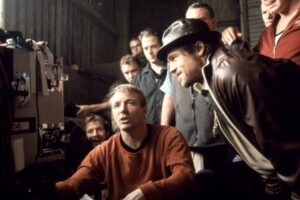
Garland started out as a comics artist and sees cinematography as a collective art form: “We share our goal, everyone brings their own vision. The material is framed and filmed by a director of photography, collected by VFX masters. I write the script and show it to people, some of whom I have been working with for 20 years. Everything in order to get their opinion. “
Garland sees nothing good in the theory of auteur cinema. “Is Wes Anderson the author? Yes of course. His handwriting is visible in everything. But these are a minority. And are there true authors who consider themselves to be such? When an advertising campaign uses the wording “Film of such and such a director” – it is almost always a lie and an insult to all the people who worked on the project, who are ignored because of the director’s vanity. If the contribution of cinematographers to the visual side of cinema is not so important, why are the studios fighting for them?